Kitchenware represents some of the earliest tools crafted by humans to enhance their quality of life. The history of these vessels is, in fact, a chapter in the history of human civilization; a timeline that began with simple clay bowls and has evolved today into the production of advanced wares like Stoneware.
Thousands of years ago, when humans were hunter-gatherers, there were no vessels for cooking. Food was prepared on hot stones or directly over an open fire. To store water and provisions, early humans relied on animal hides, dried gourds, shells, or natural rock hollows. With the advent of agriculture and permanent settlements, human needs shifted. Storing grains, carrying water, cooking, and preserving food made the creation of vessels an unavoidable necessity.
The invention of pottery is considered one of humanity's greatest achievements. Early humans discovered that clay, once shaped and subjected to fire, transformed into a hard, durable material. This discovery allowed for boiling water, cooking stews and soups, preparing legumes, and extending food preservation. For this reason, many researchers consider pottery the starting point of the evolution of the human lifestyle. In Iran, pottery boasts an incredibly ancient legacy. Archaeological sites such as Ganj Dareh, Tepe Sialk, Susa, and Shahr-e Sukhteh demonstrate that the inhabitants of the Iranian plateau possessed masterful pottery skills millennia ago, and their artifacts are still admired by archaeologists for their quality and beauty.
With the discovery of metals, copper, bronze, and eventually iron vessels entered human life. These vessels were stronger and transferred heat more quickly. Later, porcelain and advanced ceramics gradually secured a special place in households. Yet, despite these advancements, pottery was never completely phased out. Its unique properties, such as even heat distribution and a deep connection to nature, preserved its value and paved the way for a new generation of ceramic vessels.
In everyday language, these three terms are often used interchangeably, but technically, distinct differences set them apart. Pottery is made from natural clay and fired at relatively low temperatures. Its body is somewhat porous and, if unglazed, will absorb some water. Ceramic is a broad umbrella term for all products formed from non-metallic minerals and fired in a kiln. Pottery, stoneware, and porcelain all fall into the ceramic family. Porcelain is crafted from highly refined clays like kaolin and fired at extraordinarily high temperatures. The result is a white, dense, delicate, and highly durable product, primarily used for formal dining.
Among ceramics, stoneware holds a special place. This type of ceramic first emerged in China about three thousand years ago, when potters managed to build kilns with very high temperatures to produce a dense, hard, and low-porosity body. Stoneware can be seen as the connecting link between traditional pottery and porcelain. These vessels are more resistant than ordinary pottery while maintaining their natural warmth and handmade feel. Due to high-temperature firing, the stoneware body absorbs almost no water, is highly durable, and is an ideal choice for everyday use, cooking, and serving food.
In recent years, stoneware has become one of the most popular choices in modern kitchens worldwide. This popularity stems not only from its exceptional durability but also from a combination of functional and aesthetic qualities. Key advantages include:
For these reasons, many professional restaurants, cafes, and modern homes today use stoneware dishes to serve food.
Stoneware is a choice for today and tomorrow. If pottery symbolizes the dawn of human civilization and porcelain represents delicacy and formality, stoneware can be considered the symbol of contemporary life; a product that brings together the authenticity of clay, the beauty of art, and modern technology. Stoneware dishes are not just made for serving food; they are part of life's experience. Every piece is the result of combining natural elements, the skill of artists, and precise production technology. At Dorika, we pursue this very vision: creating products that, alongside quality and durability, bring beauty and a sense of nature to the home and dining table. We believe a good plate is not just a vessel for serving food; it is a companion for your memories, gatherings, and unforgettable moments.
One of the most fascinating and oldest materials in the ceramic world is Stoneware. The history of stoneware, much like the clay itself, is highly solid, deep, and full of technical and artistic details. If you agree, let's take a short historical and technical journey into the depths of this remarkable material's history:
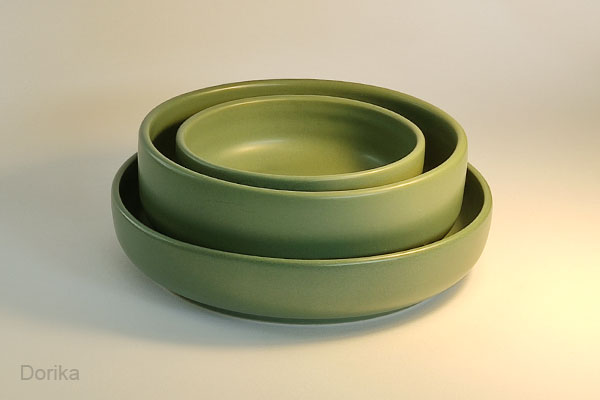
Before diving into history, it is good to know why it is called stoneware. Stoneware is ceramic fired at very high temperatures (about 1200 to 1300 degrees Celsius). This intense heat causes vitrification—meaning the clay particles fuse together, porosity is reduced to almost zero, and it becomes hard and impermeable like stone, absorbing no water even without a glaze.
Unlike porcelain, which reached its peak later, stoneware is much older:
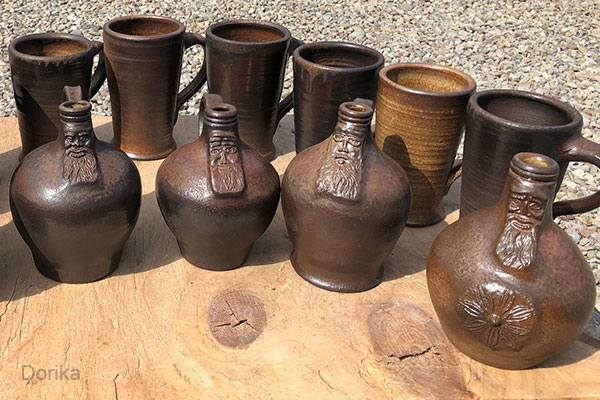
For centuries, the high-temperature formula remained an East Asian monopoly until the 13th century, when the Germans broke the lock on this technology in Europe: Cities in the Rhine Valley (like Siegburg and Cologne) became hubs for stoneware production. They crafted vessels known as Bartmann jugs (bearded jugs) featuring a carved image of a bearded man, exported across Europe for storing beer and wine. Later, the Germans discovered that throwing common salt (sodium chloride) into the kiln at peak temperature caused the sodium to react with the silica in the clay, creating a glossy, "orange-peel" textured, incredibly durable glaze. This discovery brought a massive revolution in vessel durability.
In England, stoneware transformed into a luxurious yet functional art. Europeans loved the delicate white porcelain of China, but producing it was difficult. By improving the stoneware formula, the English made products that were much cheaper and more durable.
Josiah Wedgwood: This genius potter introduced two revolutionary types of stoneware in the 1770s:
Industrial Revolution and Technical Uses: With industrial advancement, stoneware was used to make municipal sewer pipes (due to high acid resistance), ink bottles, chemical jugs, and electrical insulators.
Arts and Crafts Movement: In the late 19th and early 20th centuries, artists grew tired of soulless factory goods and returned to handmade stoneware and artistic glazes (like those inspired by Japanese styles). Stoneware became the primary medium for Studio Pottery. Today, it is the most popular material for consumer vessels in cafes and modern homes, thanks to its beauty and suitability for microwaves, dishwashers, and ovens. The natural texture of the clay and the play of glaze colors at high temperatures give each vessel a unique identity, which is precisely the sense of authenticity brands like Dorika seek in their designs.
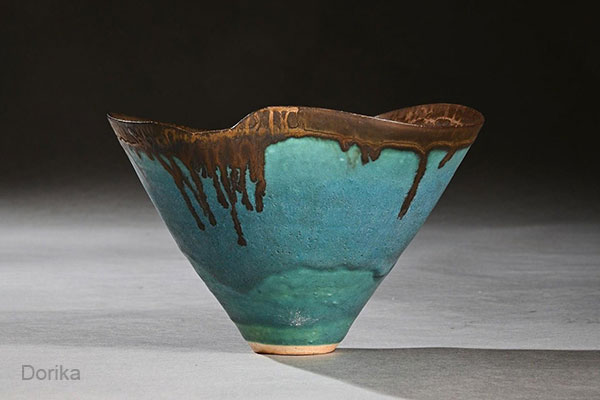
The process of producing stoneware is a fascinating symphony combining art, geology, and thermal engineering. In this process, clay is transformed into an artificial, glass-like stone under high temperature and pressure. Below, we detail the industrial and studio production steps of stoneware with technical and metallurgical specifics:
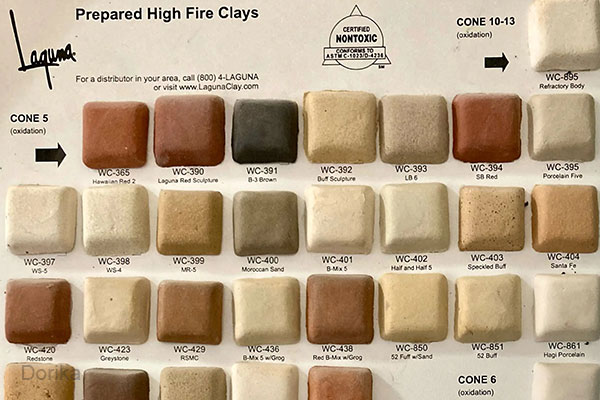
Unlike ordinary clay (earthenware), stoneware clay is a composite formula designed to withstand temperatures above 1200°C without deforming.
Depending on the design and production volume, three main methods are used:
When the vessel is slightly dried to a "leather-hard" state (still holding some moisture but not deforming):
Vessels must dry completely evenly and slowly to reach the bone-dry greenware stage. If even a trace of uneven moisture remains, it will turn into steam in the kiln and cause the piece to explode. At this stage, the vessel is extremely fragile.
The raw vessels enter the kiln. The first firing usually takes place at 900 to 1000°C.
Purpose: This firing removes the chemical water from the clay's structure, turning it into a hard but porous body. The porosity of the bisque is crucial because it allows the body to absorb the water from the glaze, helping the glaze adhere to the surface.
The glaze is a mixture of glass powder, silica formers, fluxes, and metal oxides (for coloring) suspended in water.
The difference between stoneware and ordinary pottery here is that, due to the body composition, a very strong mechanical and chemical bond is formed between the stoneware clay and the glaze during the second firing, preventing future crazing or chipping.
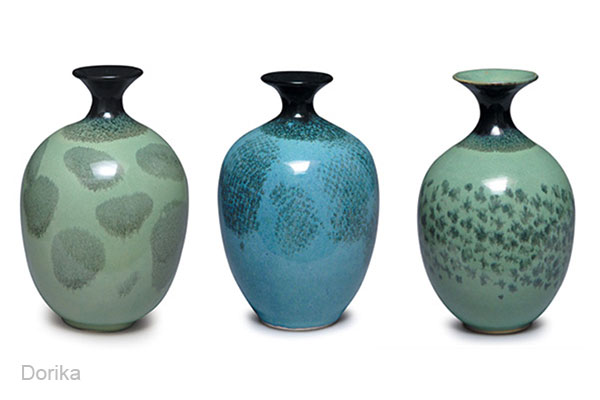
This is the most critical and highly engineered part of the process. The glazed vessels return to the kiln, and the temperature is raised to 1200 - 1300°C. Two parallel events occur:
After the kiln has completely cooled (usually taking 24 hours), the vessels are removed. The foot rings, which are left unglazed to prevent sticking to the kiln shelves, are sanded down with special sandpaper or diamond discs to become perfectly smooth, ensuring they won't scratch wooden tables or other surfaces. Finally, the finished stoneware product is ready for packaging, shipping, and enduring harsh daily use.
Iran is recognized as one of the world's most ancient pottery centers. Artifacts unearthed from sites like Tepe Sialk, Shahr-e Sukhteh, and Susa reveal that thousands of years ago, locals crafted vessels adorned with geometric, animal, and plant motifs. These designs were not merely decorative; they sometimes reflected religious beliefs, daily life narratives, or identity symbols.
Pottery is a turning point in human history because the invention of pottery meant more than just making a vessel; it allowed for storing food for months, cooking hard foods like legumes, carrying water, and creating food reserves. These abilities allowed humans to settle in one place, expand agriculture, and build larger, more organized societies. Therefore, pottery can be considered one of the foundational technologies that paved the way for civilization.
While Iran is one of the oldest independent centers of pottery in the world, no single point can be identified as its absolute birthplace. Archaeologists believe pottery emerged gradually and almost simultaneously across several regions of the Iranian plateau. The most important early pottery centers in Iran are:
Many researchers consider the foothills of the Zagros Mountains the primary cradle of pottery in Iran. Important sites include Ganj Dareh, Tepe Sarab, and Tepe Asiab. About 9,000 to 10,000 years ago, inhabitants of these regions began farming and animal husbandry. Initially using stone vessels and mud-lined baskets, they eventually turned to making pottery. The catalyst for this advancement was settlement; once humans settled, they needed vessels to store grain, water, and food.
Another highly significant center is the Khuzestan Plain. At sites like Chogha Bonut, Chogha Mish, and Susa, pottery advanced rapidly. Vessels were not only for daily use but were decorated with geometric, botanical, and animal motifs.
Around 7,000 years ago, pottery in central Iran also reached its zenith, with Tepe Sialk being the most prominent center. Sialk pottery pieces are among the most beautiful prehistoric artifacts in Iran, many decorated with red, brown, and black colors featuring ibexes, birds, and geometric shapes.
Later, pottery flourished in eastern Iran as well. The most famous site is Shahr-e Sukhteh (The Burnt City). Around 5,000 years ago, potters here produced incredibly thin, light, and well-crafted vessels that showcased their immense skill. One of the most famous artifacts from this site is a goblet depicting a sequence of a leaping goat; when spun, it creates a simple animation, making it the earliest known example of moving pictures in art history. What distinguishes Iranian pottery from many other regions is not just its age but its quality and beauty. Iranian potters paid special attention to vessel decoration since prehistoric times. Motifs like the ibex (a symbol of abundance and life), birds, fish, the sun, lines, and geometric shapes are found on the wares. These motifs likely held symbolic and ritualistic meanings beyond their aesthetic appeal.
It cannot yet be stated with certainty that pottery was first invented in Iran. The oldest known pottery globally dates back 16,000 to 20,000 years in East Asia, particularly parts of China and Japan. However, Iran is one of the earliest independent centers of pottery development in the world and played a crucial role in shaping and spreading pottery across the Middle East. For this reason, archaeologists refer to the Iranian plateau as one of the most important hubs for the evolution of pottery art and technology during the Neolithic era and the dawn of civilization.
Clay vessels are still produced in many countries around the world, including Iran; but their status has changed compared to the past. Historically, pottery was one of the primary materials for household vessels. Almost all families used clay pots for cooking, holding water, storing grains, oil, dairy, and even serving food, because metals were expensive and glass and porcelain were not easily accessible. However, over the past 150 to 200 years, with the expansion of industrial production, materials like cast iron, aluminum, stainless steel, glass, and glazed ceramics gradually replaced pottery. These vessels were lighter, more durable, and generally easier to maintain and clean.
Pottery still retains its uses, but these have become more specialized. Today, clay pots are used for various purposes: slow-cooking traditional foods like Abgoosht, Dizi, and stews; storing water in clay jugs that naturally keep it cool; serving food in traditional restaurants; and for decoration and handicrafts, such as making vases and ornamental dishes. Clay pots transfer heat slowly and evenly, which prevents food from burning at the bottom. Cooking is done more slowly, and some believe the flavor is better preserved. However, not all clay pots are suitable for cooking; they must be specifically made for it and fired at the right temperature, otherwise, they may crack from thermal shock.
Although the pottery market is not as expansive as it once was, it is still booming in certain Iranian cities. The most important pottery centers include Lalejin, known as the "Pottery Capital of Iran"; Meybod, famous for its glazed and patterned ceramics; and Kalpuregan, one of the oldest pottery centers in the world, which still produces pottery using ancient methods without a potter's wheel.